


Florida Property Tax Relief Proposal
What Northwest Cape Homeowners Need to Know
The information below is intended to provide a factual overview of a proposed Florida constitutional amendment that could significantly reduce property taxes on homesteaded properties. NWNA does not endorse or oppose ballot initiatives. Our goal is to help residents understand the potential impacts before voting.
Why Is This Proposal Being Discussed?
Property taxes have become a growing concern for many Florida homeowners. Rising home values, increasing insurance costs, utility expenses, and overall inflation have placed additional financial pressure on residents, particularly retirees and those on fixed incomes.
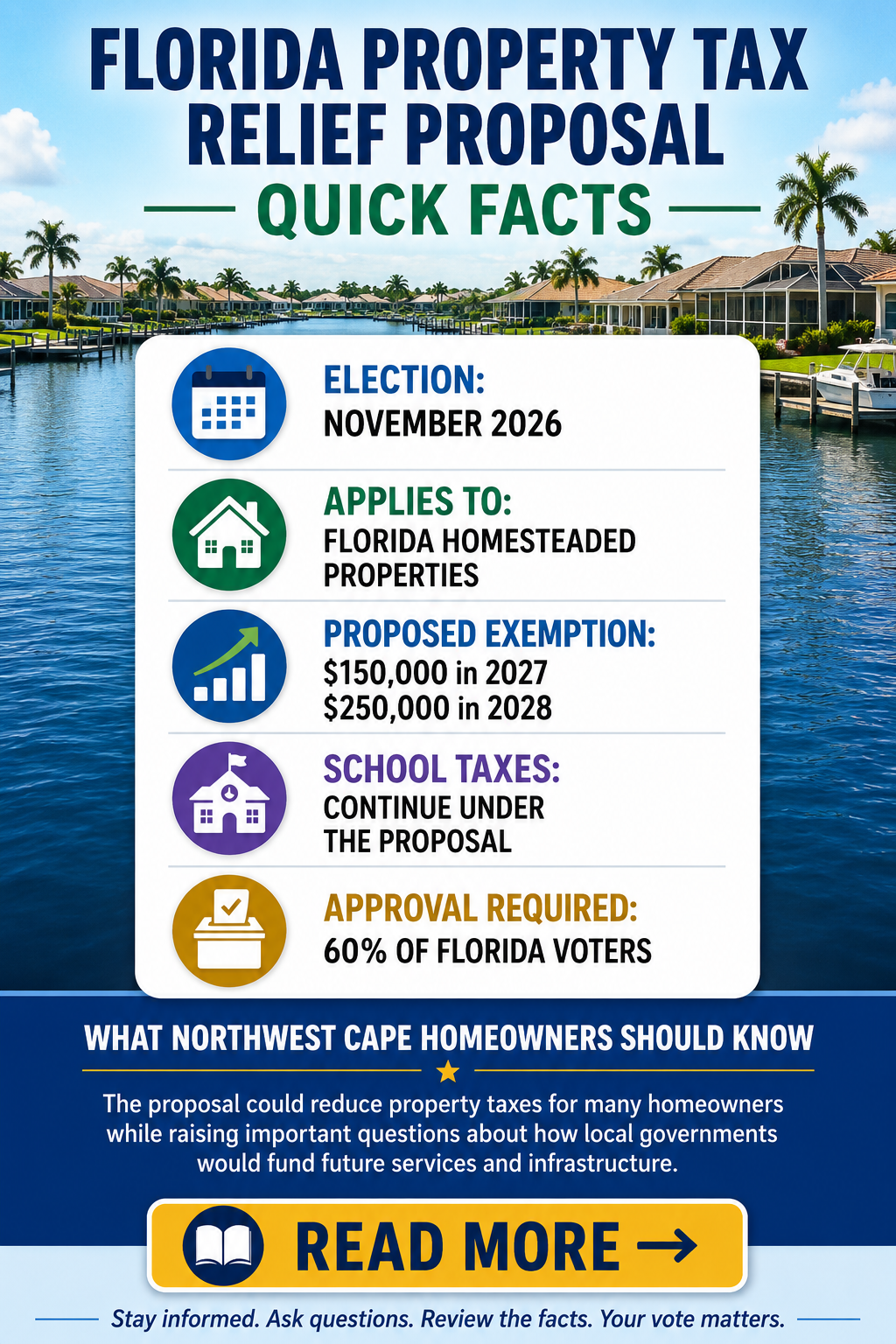
In response, Florida lawmakers have advanced a proposal that would substantially increase homestead exemptions for primary residences. If approved by voters in November 2026, the proposal could significantly reduce the amount of property tax paid by many Florida homeowners.
What Is Being Proposed?
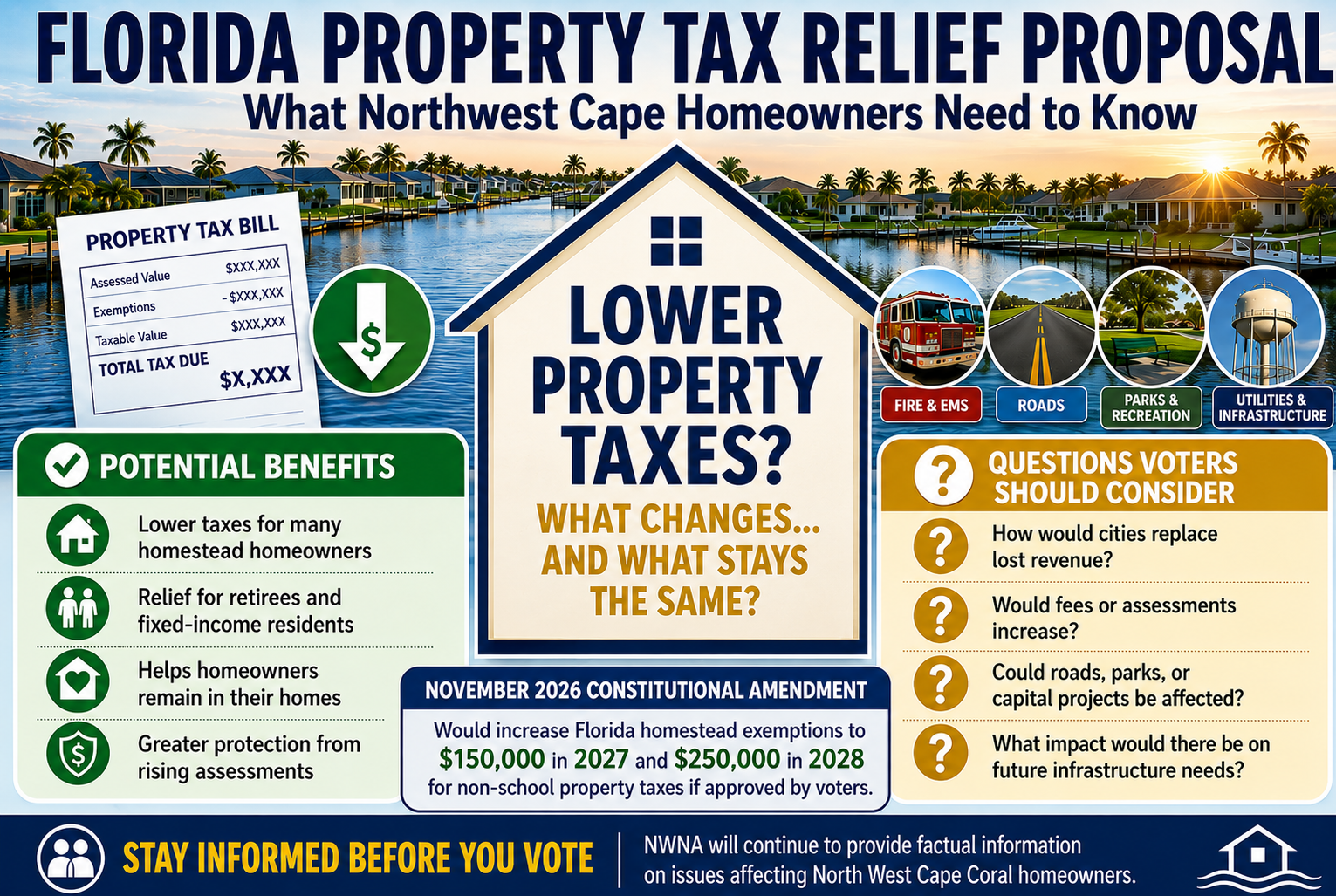
The proposal would increase Florida's homestead exemption for non-school property taxes to:
$150,000 beginning in 2027
$250,000 beginning in 2028
Future adjustments tied to inflation
School district property taxes would continue to apply. The proposal would require approval by at least 60% of Florida voters during the November 2026 General Election.
Potential Benefits for Homeowners
Supporters of the proposal point to several potential advantages:
Lower Annual Property Tax Bills
Many homesteaded homeowners could see meaningful reductions in their annual property tax obligations. a
Relief for Retirees and Fixed-Income Residents
Property taxes can become increasingly difficult to manage when household income remains relatively fixed. Additional exemptions could help many residents remain in their homes longer.
Increased Housing Affordability
Reducing annual ownership costs may make homeownership more affordable and predictable.
Greater Protection Against Rising Assessments
As property values increase, additional homestead protections may help reduce the impact of future assessment growth.
Economic Benefits
Supporters argue that money saved on property taxes may remain in local communities through consumer spending, home improvements, and investment.
Important Questions Voters Should Consider
While lower property taxes may be attractive to many homeowners, there are also important policy questions that deserve consideration.
How Would Local Governments Replace Lost Revenue?
Property taxes currently fund many local government operations and services.
These include:
Police services
Fire protection
Emergency management
Road maintenance
Parks and recreation
Environmental programs
Planning and growth management
Administrative services
If property tax revenues decline significantly, local governments may need to identify alternative revenue sources.
Could Other Fees Increase?
One question frequently raised during discussions of property tax reduction is whether governments might offset lost revenue through:
Assessments
Utility fees
Permit fees
Impact fees
Service charges
Sales taxes (where authorized)
The answer would vary by community and future policy decisions.
What About Fire and EMS Services?
A common misconception is that fire and emergency medical services are funded entirely through assessments.
In reality, most public safety systems rely on a combination of funding sources, which may include:
Property taxes
Fire assessments
Ambulance transport fees
Grants
Impact fees
Other local revenues
Because funding structures differ among jurisdictions, residents may wish to understand how their local services are funded before reaching conclusions.
Could Future Infrastructure Projects Be Affected?
Cape Coral is one of Florida's fastest-growing cities.
Major infrastructure needs continue to include:
Road improvements
Utility expansion
Drainage projects
Water quality initiatives
Parks and recreational facilities
Public safety facilities
Voters may wish to consider how reduced property tax revenues could affect long-term capital planning and infrastructure investment.
Why This Matters to Northwest Cape Coral
Northwest Cape Coral continues to experience substantial growth and development.
Residents frequently express concerns about:
Road capacity
Utility expansion
Waterway maintenance
Public safety
Parks and recreation
Hurricane preparedness
Future infrastructure needs
At the same time, many homeowners are seeking relief from rising costs associated with:
Property insurance
Flood insurance
Utilities
Home maintenance
Property taxes
As a result, many Northwest Cape residents may find themselves weighing two legitimate priorities:
Reducing the Cost of Homeownership
and
Maintaining Long-Term Community Services and Infrastructure
Both are important considerations.
The Central Question
Ultimately, the debate is not simply whether lower property taxes are good or bad.
The key question for voters is:
If property taxes on homesteaded homes are significantly reduced, how should local governments replace the revenue needed to provide services and maintain infrastructure?
Reasonable people may reach different conclusions.
NWNA's Commitment:
NWNA will continue to monitor this issue and provide factual information as additional details become available. Our mission is to help Northwest Cape residents make informed decisions on issues that affect our community, property values, quality of life, and future growth. Stay informed. Ask questions. Review the facts. Then vote according to your own priorities and values.


Important Notices

